Spartans thrive when they prioritize their health and well-being. When a health condition makes it difficult to stay enrolled and be academically successful, the Medical Leave and Return Process (MLRP) allows students to take time away, access support and return when they are ready.
What is a medical leave?
A student medical leave is a university-verified withdrawal from all courses in a term due to a significant health condition.
Things to consider:
- Students must be currently or have been under the care of a licensed treatment provider.*
- The provider must be willing to confirm the student's health condition and how it affected their ability to be successful during the term.
- The health condition can be related to physical health, mental health or a combination of concerns.
*OSSA defines a licensed treatment provider as an individual who possess valid and active credentials from a licensing body to practice medicine or provide treatment to humans. Examples include but are not limited to nurse practitioners, psychologists, psychiatrists, medical doctors or clinical social workers.
Who is eligible for medical leave?
The MLRP is available to most MSU students, except those in the College of Human Medicine, College of Law and College of Osteopathic Medicine. Students in these colleges may seek leave information directly from their college’s student affairs office.
What would not be considered a medical leave?
The OSSA medical leave process is not for students:
- who plan to take time away from MSU in the future and do not need to address their enrollment status or grades from a current or previous semester.
- who are seeking support for pregnancy, childbirth, pregnancy-related or parenting based health requests. Students should contact the Office of Civil Rights to request supportive measures or modifications related to these needs.
How many medical leaves can I take?
Students are permitted a maximum of two medical leaves during their time in an educational program. Only the term withdrawn counts towards the two-term limit. For example, if a student withdraws during the spring 2026 semester and is on leave until they return in spring 2027, they have only taken one leave.
Summer semesters are considered a singular term. The request for a medical leave cannot be differentiated between summer session 1 or 2. If a medical leave is granted, all summer semesters are withdrawn.
How long can a student stay unenrolled while on leave?
The length of a medical leave is a personal decision and does not have a maximum duration. MSU encourages students to take time to attend to their well-being and put needed support systems in place.
However, students who are unenrolled for three consecutive semesters (including their semester of leave and the summer semester) must go through the readmission procedure.
Still have questions about medical leave? Please review the other frequently asked questions.
Taking a Medical Leave: Understanding Withdrawal from the University
A medical leave involves withdrawing (dropping all classes). Withdrawing from college is a big decision which can affect finances, on-campus-housing, immigration status and more.
Review the steps involved with a withdrawal to decide if a medical leave is the right decision.
Please note that requesting a medical leave does not allow a student to keep any courses or retroactively withdraw only specific courses. An approved medical leave always means all courses will be withdrawn.
Timing
Timing affects how students withdraw, what appears on their transcript and their eligible refund. The below timeframes represent specific milestones in a semester. Please visit the academic calendar for the specific dates of the semester.
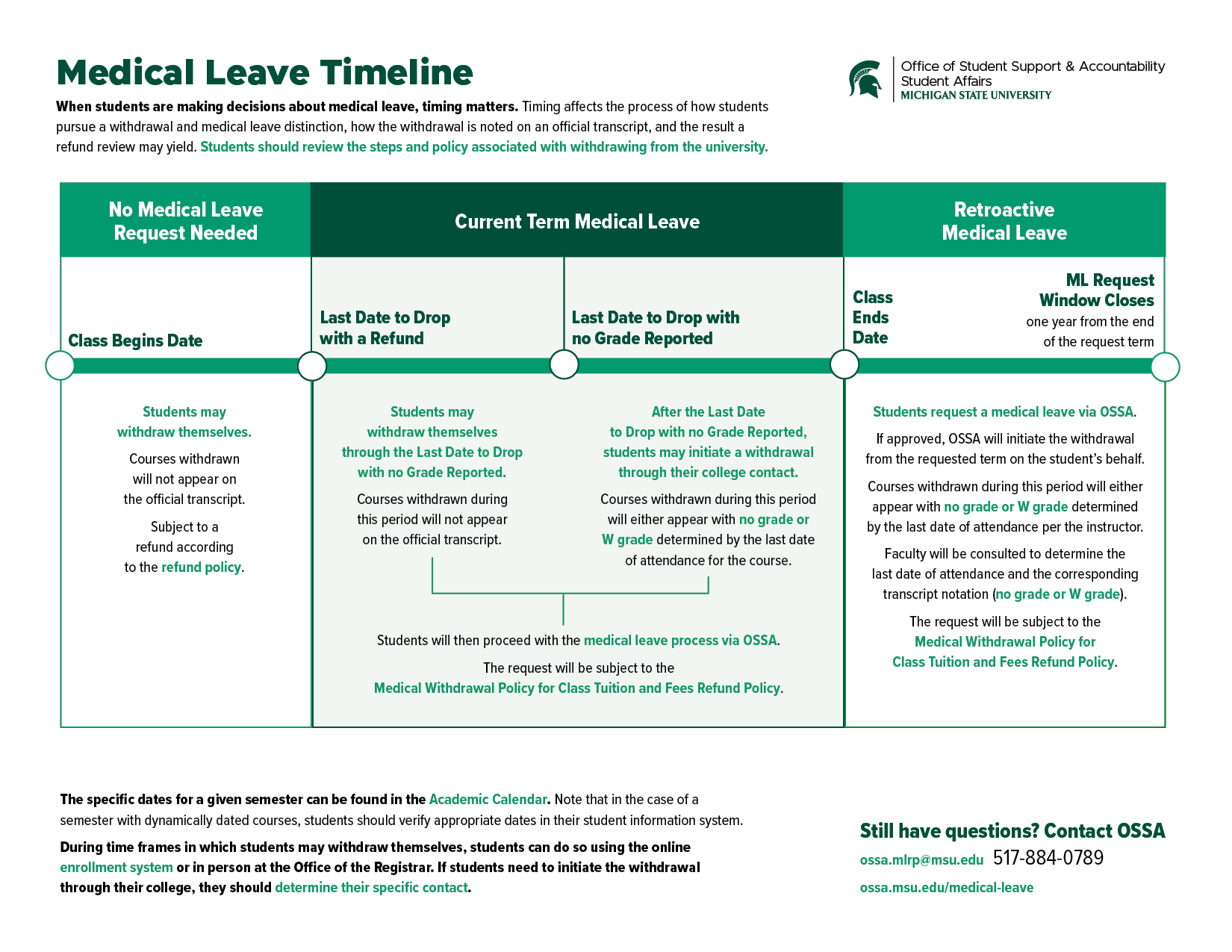
Download the Medical Leave Timeline Infographic.
Current Term
Students can request a medical leave for the current academic term between the Last Date to Drop with no Grade Reported (mid-point of the semester) and the Class Ends Date.
Withdrawing Between Class Begins Date to Last Date Drop with a Refund
No medical leave request is needed.
- Method: Students may withdraw themselves through the online enrollment system.
- Transcript: Courses withdrawn will not appear on the official transcript.
- Refund: Subject to the refund policy.
Withdrawing Between the Last Date to Drop with a Refund and Last Date to Drop with no Grade Reported
- Method: Students may withdraw themselves through the online enrollment system. After they have been withdrawn, students can request the withdrawal be designated as a medical leave through a medical leave request.
- Transcript: Courses withdrawn during this period will not appear on the official transcript.
- Refund: The request will be subject to the Medical Withdrawal Policy for Class Tuition and Fees Refund Policy.
Last Date to Drop with no Grade Reported to Class Ends Date
Note that the Class Ends Date does not include finals week.
- Method: Students can no longer self-adjust their enrollment. Students may initiate a withdrawal through their college contact.
- Transcript: Courses withdrawn during this period will either appear with no grade or W grade determined by the last date of attendance for the course. After they have been withdrawn, students can request the withdrawal be designated as a medical leave through a medical leave request.
- Refund: The request will be subject to the Medical Withdrawal Policy for Class Tuition and Fees Refund Policy.
Retroactive Medical Leave
Students can request a retroactive medical leave after the Class Ends Date if the health condition prevented the student from withdrawing during the term. Requests must be submitted within one year of the term (before the next year’s commencement date). For example, the last day to request a medical leave for fall 2026 is the fall 2027 commencement date.
- Method: Students request a medical leave. If approved, OSSA will retroactively withdraw the student from the selected term.
- Transcript: Courses withdrawn during this will either appear with no grade or "W" grade determined by the last date of attendance for the course as reported by the faculty member.
- Refund: The request will be subject to the Medical Withdrawal Policy for Class Tuition and Fees Refund Policy.
What are the potential outcomes of a medical leave request?
- Not granted: If a request is not supported, the Office of Student Support & Accountability will provide an explanation for the outcome and an opportunity for the student to initiate a new request for the requested term.
- Granted: The student’s request for Medical Leave is supported by their treatment provider’s documentation and the rationale indicates that the student has made sufficient progress to keep any future courses they are already enrolled in or to enroll in classes for future terms.
- Granted with Readiness to Return: documentation required the student’s request for Medical Leave is supported and the provider’s documentation indicates the student needs to make additional progress before re-enrolling. When readiness to return is required:
- students are withdrawn from any courses they are enrolled in for both the semester they are requesting and any future semesters.
- a hold is placed preventing enrollment until a readiness to return request has been submitted and approved.
What factors does OSSA consider in the review of a request for medical leave?
Treatment provider’s assessment of:
- the impact of the student's condition(s) on their academic success
- dates of impact, dates of treatment, number of appointments or sessions
- the specific impairments linked to the condition and their impact on the student's ability to be successful as a student
- the timing of the condition impacts and the semester of request
- the assessment of the students' progress toward planned goals and readiness to return to the academic environment